El Día de los Muertos en México
A celebration of memory, love, and life beyond death
Origins of the Tradition
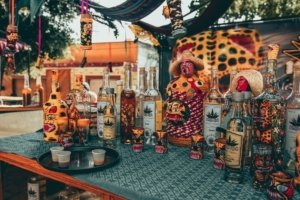
The celebration known as El Día de los Muertos has its roots in pre-Hispanic Mexico, long before the arrival of the Spanish. Indigenous civilizations such as the Aztecs, Toltecs, and Mixtecs believed that death was only one part of a continuous cycle. They honored their ancestors through offerings, dances, and rituals meant to keep their spirits alive in memory and gratitude.
When Spanish colonizers brought Catholicism, the indigenous practices merged with All Saints’ Day and All Souls’ Day, creating the tradition we know today. This blend of cultures produced one of Mexico’s most distinctive celebrations, recognized by UNESCO as part of the Intangible Cultural Heritage of Humanity.
The Meaning Behind the Celebration
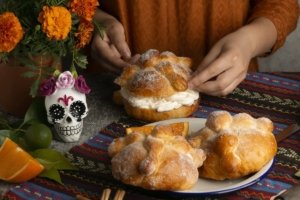
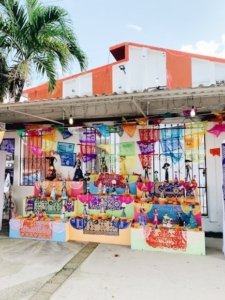
El Día de los Muertos is not a day of sadness. It is a moment to celebrate life and the memory of loved ones who have passed away. Families gather to build ofrendas (altars) decorated with flowers, photos, candles, and traditional foods such as pan de muerto and sugar skulls.
Each element of the altar has deep meaning. Candles represent light that guides souls back to the world of the living. Cempasúchil flowers (marigolds) symbolize the fragility of life. Water refreshes the spirit after its journey. And photos remind the living of the bond that never breaks.
Las Catrinas y Los Catrines
One of the most iconic symbols of this day is La Catrina, created by José Guadalupe Posada and later popularized by artist Diego Rivera. She represents death not as something to fear, but as part of life itself. Her elegant dress and wide hat remind people that death touches everyone, rich or poor.
During the celebration, people paint their faces like skulls to resemble Las Catrinas and Los Catrines. Their makeup often includes black, white, and colorful designs that highlight eyes and cheekbones, while they wear formal clothes, flowers, or even traditional costumes. The sight of entire families dressed as living skeletons fills the streets with a mix of art, respect, and joy.
How It Is Celebrated Today
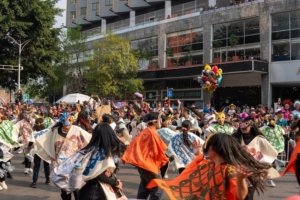
In modern Mexico, the celebration takes place on November 1st and 2nd. On the first day, people honor children who have died, known as angelitos. The second day is dedicated to adults. Many communities prepare parades, concerts, exhibitions, and cemetery visits where families clean graves, light candles, and spend time together.
Schools and public institutions also join the festivities by creating altars, organizing art contests, and holding exhibitions about death as part of life. The streets are filled with paper decorations, skulls made of sugar or clay, and people in colorful costumes.
A Tradition That Connects the Country
Although El Día de los Muertos has a special meaning in every region, its heart remains the same: remembrance. In places like Oaxaca, Michoacán, and the Yucatán Peninsula, each community adds its own local customs, food, and music. Yet the essence—the idea of honoring the dead through life—unites the entire nation.
The celebration has also inspired similar traditions across Latin America and even beyond. What makes it unique in Mexico is the balance between solemnity and celebration, life and death, tears and laughter. It is not about forgetting but remembering with love.
Legacy and Cultural Pride
El Día de los Muertos continues to evolve. It appears in films, art, and global festivals, yet its true meaning stays in the hearts of families who light candles and remember names. Each altar, each flower, each song tells a story that connects generations.
For Mexicans, death is not the end. It is an opportunity to meet again, to talk through memory, and to celebrate those who came before us. This day reminds everyone that love transcends time.
Bilingual Vocabulary Box
| English Word or Expression | Spanish Equivalent | Meaning or Use |
|---|---|---|
| Offering / Altar | Ofrenda / Altar | Decorated space to honor the dead |
| Marigold | Cempasúchil | Traditional flower symbolizing life and death |
| Sugar Skull | Calavera de azúcar | Sweet skull used as decoration and symbol of the dead |
| To honor | Honrar | To show respect or admiration |
| Remembrance | Recuerdo | The act of remembering someone |
| Tradition | Tradición | Cultural practice passed down through generations |
| Face Painting | Pintura facial | Artistic makeup resembling a skull |
| Cemetery | Cementerio / Panteón | Place where people visit their loved ones’ graves |
| Legacy | Legado | Cultural inheritance or lasting influence |
| To transcend | Trascender | To go beyond or surpass limits, often across time |
Vocabulary adapted for advanced English learners studying Mexican culture and traditions.


