
El Día de los Muertos en México

A celebration of memory, love, and life beyond death
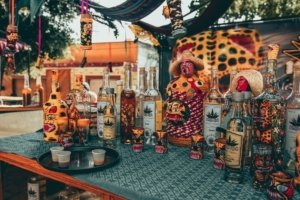
Origins of the Tradition

The celebration known as El Día de los Muertos has its roots in pre-Hispanic Mexico, long before the arrival of the Spanish. Indigenous civilizations such as the Aztecs, Toltecs, and Mixtecs believed that death was only one part of a continuous cycle. They honored their ancestors through offerings, dances, and rituals meant to keep their spirits alive in memory and gratitude.

When Spanish colonizers brought Catholicism, the indigenous practices merged with All Saints’ Day and All Souls’ Day, creating the tradition we know today. This blend of cultures produced one of Mexico’s most distinctive celebrations, recognized by UNESCO as part of the Intangible Cultural Heritage of Humanity.
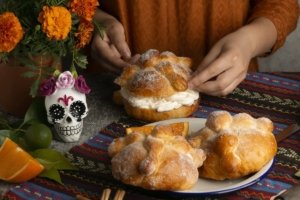
The Meaning Behind the Celebration

El Día de los Muertos is not a day of sadness. It is a moment to celebrate life and the memory of loved ones who have passed away. Families gather to build ofrendas (altars) decorated with flowers, photos, candles, and traditional foods such as pan de muerto and sugar skulls.

Each element of the altar has deep meaning. Candles represent light that guides souls back to the world of the living. Cempasúchil flowers (marigolds) symbolize the fragility of life. Water refreshes the spirit after its journey. And photos remind the living of the bond that never breaks.

Las Catrinas y Los Catrines

One of the most iconic symbols of this day is La Catrina, created by José Guadalupe Posada and later popularized by artist Diego Rivera. She represents death not as something to fear, but as part of life itself. Her elegant dress and wide hat remind people that death touches everyone, rich or poor.

During the celebration, people paint their faces like skulls to resemble Las Catrinas and Los Catrines. Their makeup often includes black, white, and colorful designs that highlight eyes and cheekbones, while they wear formal clothes, flowers, or even traditional costumes. The sight of entire families dressed as living skeletons fills the streets with a mix of art, respect, and joy.
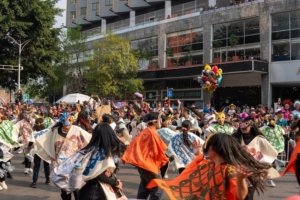
How It Is Celebrated Today

In modern Mexico, the celebration takes place on November 1st and 2nd. On the first day, people honor children who have died, known as angelitos. The second day is dedicated to adults. Many communities prepare parades, concerts, exhibitions, and cemetery visits where families clean graves, light candles, and spend time together.

Schools and public institutions also join the festivities by creating altars, organizing art contests, and holding exhibitions about death as part of life. The streets are filled with paper decorations, skulls made of sugar or clay, and people in colorful costumes.

A Tradition That Connects the Country

Although El Día de los Muertos has a special meaning in every region, its heart remains the same: remembrance. In places like Oaxaca, Michoacán, and the Yucatán Peninsula, each community adds its own local customs, food, and music. Yet the essence—the idea of honoring the dead through life—unites the entire nation.

The celebration has also inspired similar traditions across Latin America and even beyond. What makes it unique in Mexico is the balance between solemnity and celebration, life and death, tears and laughter. It is not about forgetting but remembering with love.
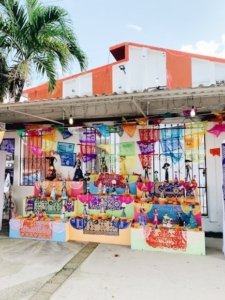
Legacy and Cultural Pride

El Día de los Muertos continues to evolve. It appears in films, art, and global festivals, yet its true meaning stays in the hearts of families who light candles and remember names. Each altar, each flower, each song tells a story that connects generations.

For Mexicans, death is not the end. It is an opportunity to meet again, to talk through memory, and to celebrate those who came before us. This day reminds everyone that love transcends time.


Bilingual Vocabulary Box

English Word or Expression Spanish Equivalent Meaning or Use
Offering / Altar Ofrenda / Altar Decorated space to honor the dead
Marigold Cempasúchil Traditional flower symbolizing life and death
Sugar Skull Calavera de azúcar Sweet skull used as decoration and symbol of the dead
To honor Honrar To show respect or admiration
Remembrance Recuerdo The act of remembering someone
Tradition Tradición Cultural practice passed down through generations
Face Painting Pintura facial Artistic makeup resembling a skull
Cemetery Cementerio / Panteón Place where people visit their loved ones’ graves
Legacy Legado Cultural inheritance or lasting influence
To transcend Trascender To go beyond or surpass limits, often across time

Vocabulary adapted for advanced English learners studying Mexican culture and traditions.

Beginner Grammar Quiz

Click the answer button to see the correct answer.

  1. What is your name?
    a. My name is John.
    b. I am fine.
    c. At school.
  2. Where are you from?
    a. New York.
    b. I am fine.
    c. At school.
  3. How old are you?
    a. I’m a student.
    b. I’m 20 years old.
    c. I’m from Japan.
  4. What time is it?
    a. It’s sunny.
    b. It’s 3 o’clock.
    c. It’s my watch.
  5. What are you doing?
    a. I eat.
    b. I am eating.
    c. I ate.
  6. Do you like coffee?
    a. Yes, I do.
    b. Yes, I am.
    c. Yes, I have.
  7. Can you swim?
    a. Yes, I can.
    b. Yes, I do.
    c. Yes, I am.
  8. Where is your bag?
    a. It’s black.
    b. It’s on the table.
    c. It’s mine.
  9. Who is that woman?
    a. She is my teacher.
    b. She is tall.
    c. She is a student.
  10. What do you do?
    a. I’m a teacher.
    b. I’m fine.
    c. I’m tall.
  11. When is your birthday?
    a. It’s November second.
    b. It’s my cake.
    c. It’s in the park.
  12. Where do you live?
    a. I live in Tokyo.
    b. I’m living now.
    c. I’m from Japan.
  13. What are you wearing?
    a. I wear shoes.
    b. I’m wearing a blue shirt.
    c. I was wearing.
  14. Do you have any brothers or sisters?
    a. Yes, I have one sister.
    b. Yes, I am.
    c. Yes, I do play.
  15. What did you eat for breakfast?
    a. I eat bread.
    b. I ate bread.
    c. I am eating bread.
  16. Where were you yesterday?
    a. I’m at home.
    b. I was at home.
    c. I am home.
  17. What will you do tomorrow?
    a. I will study English.
    b. I study English.
    c. I studying English.
  18. How do you go to school?
    a. By bus.
    b. In bus.
    c. With bus.
  19. What’s your favorite color?
    a. Colorful.
    b. Blue.
    c. Yes, I do.
  20. How are you today?
    a. I’m fine, thank you.
    b. I’m student.
    c. I’m in Tokyo.

Copyright (C)

Click the answer button to see the correct answer.


  1. How often do you play tennis?
    a. On Tuesday.
    b. For two hours.
    c. Almost every day.
    d. With John.
  2. Where do you usually eat lunch?
    a. Sandwich.
    b. With Jane.
    c. At 12:00.
    d. In the cafeteria.
  3. How long did you study last night?
    a. With Bob.
    b. In my room.
    c. English.
    d. For three hours.
  4. What kind of novels do you like?
    a. Yes, I do.
    b. I like spy novels.
  5. What kind of work do you do?
    a. I work every day.
    b. I’m a piano teacher.
    c. I worked for two hours.
  6. How many hours a day do you watch TV?
    a. About two hours.
    b. In my living room.
    c. I watch the news.
    d. On Tuesday.
  7. What is your busiest day of the week?
    a. In the morning.
    b. Every day.
    c. Tuesday.
    d. Last week.
  8. My mother is a good cook.
    a. I agree with you.
    b. I agree you.
    c. I agree to you.
    d. I agree for you.
  9. What does “TV” mean?
    a. For one hour.
    b. Yes
    c. Television.
    d. For one hour.
    e. On Friday.
  10. How do you spell “dog”?
    a. No
    b. D-O-G
    c. No
    d. I don’t
    e. Cat.
    f. I have one dog.
  11. What did you do yesterday?
    a. I am swimming.
    b. I swim.
    c. I will swim.
    d. I swam.
  12. What do you like to drink?
    a. Coffee.
    b. Saturday evening.
    c. Two.
    d. With my friends.
  13. What did you eat last night?
    a. At six.
    b. Spaghetti.
    c. With my family.
    d. At home.
  14. What are you doing?
    a. I’m eating.
    b. I ate.
    c. I will be eating.
    d. I have eaten.
  15. What will you do this afternoon?
    a. I play soccer.
    b. I played soccer.
    c. I’ll play soccer.
    d. I was playing soccer.
  16. It seems to me that most restaurants are too expensive.
    a. I don’t think it.
    b. I don’t think.
    c. I don’t think so.
  17. Where’s Mike?
    a. At school.
    b. At eight.
    c. For three hours.
    d. No, he isn’t.
  18. Where do you do your homework?
    a. With John.
    b. In the evening.
    c. About one hour.
    d. Every day.
    e. At home.
  19. When did you go to that restaurant?
    a. Spaghetti.
    b. With Jane.
    c. Last night.
    d. About 30 minutes.
  20. When was the last time you took a picture?
    a. A picture of Jane.
    b. Seven pictures.
    c. About four days ago.
    d. With my camera.
  21. What were you doing last night at 7:00?
    a. I sleep.
    b. I slept.
    c. I will be sleeping.
    d. I was sleeping.
  22. When will you mail that letter?
    a. Last night.
    b. To Jane.
    c. After school.
  23. What are you going to do after dinner?
    a. I took a bath
    b. I’ll take a bath.
    c. I take a bath.
  24. How long have you been playing the trumpet?
    a. About 50 cm.
    b. For four years.
    c. In my room.
    d. By myself.
  25. How many hours a day do you sleep?
    a. I have slept 7 hours.
    b. I am sleeping 7 hours.
    c. I slept 7 hours.
    d. I sleep 7 hours.
  26. How often do you write letters?
    a. Two pages.
    b. Two times a week.
    c. Two people.
    d. Two hours.
  27. Where can I buy beer?
    a. When you are twenty years old.
    b. About two bottles.
    c. With Jane.
    d. At a liquor store.
  28. What’s your favorite sport?
    a. Swim.
    b. Swimming.
  29. When was the last time you went shopping?
    a. Yesterday.
    b. Tomorrow.
    c. Near the Station.
  30. How often do you speak on the telephone?
    a. At least once a day.
    b. In the evening?
    c. For about 30 minutes.
  31. How many times have you gone camping?
    a. Three people.
    b. Three days.
    c. Three times.
  32. When’s your birthday?
    a. November two.
    b. November twice.
    c. November second.
  33. Where are you from?
    a. New York.
    b. 1982.
    c. At school.
  34. How do you get to school?
    a. With train.
    b. In train.
    c. By train.


Copyright (C) 

Post Formats is a theme feature introduced with Version 3.1. Post Formats can be used by a theme to customize its presentation of a post.

Lorem ipsum dolor sit amet, consectetuer adipiscing elit. Aenean commodo ligula eget dolor. Aenean massa. Cum sociis natoque penatibus et magnis dis parturient montes, nascetur ridiculus mus – more on WordPress.org: Post Formats

Ut enim ad minim veniam, quis nostrud exercitation ullamco laboris nisi ut aliquip ex ea commodo consequat.

Lorem ipsum dolor sit amet, consectetur adipisicing elit, sed do eiusmod tempor incididunt ut labore et dolore magna aliqua.

Read more